

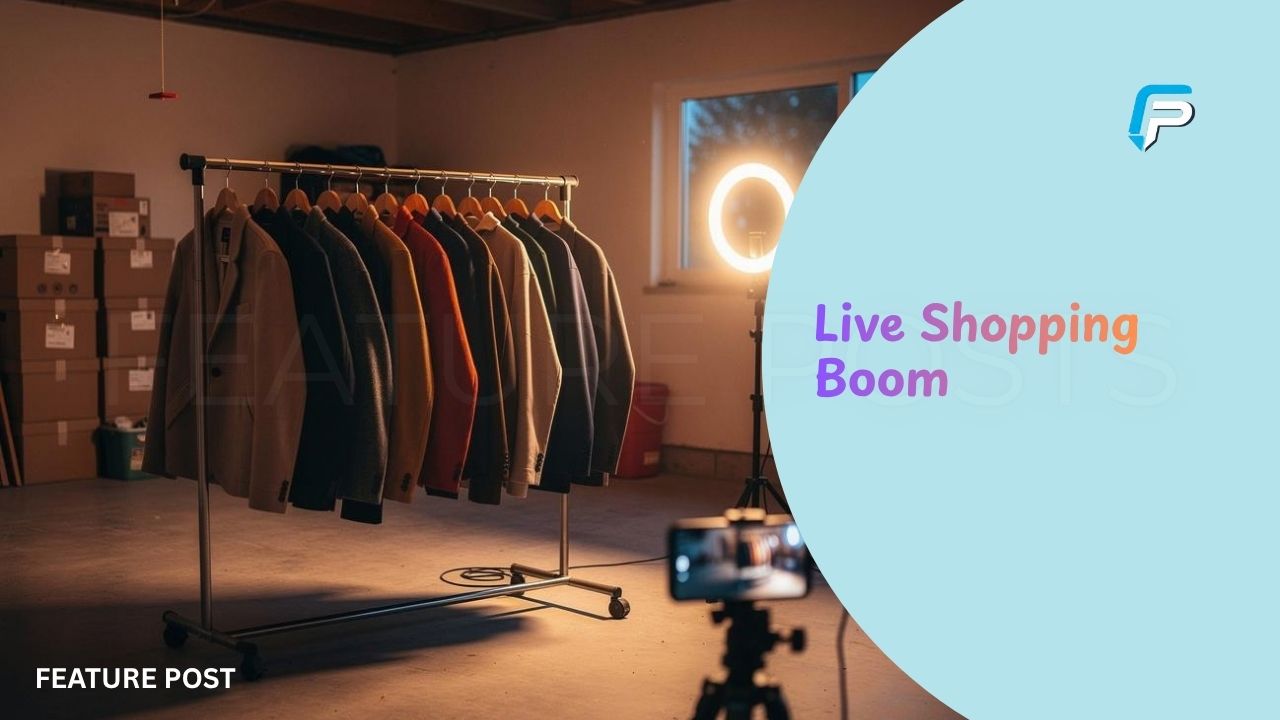
On a Tuesday evening somewhere in Britain, a woman stands in front of a clothing rail in a converted garage, phone on a tripod, ring light humming. Over the next ninety minutes she will hold forty garments up to the camera, field a few hundred chat messages, and take more money through her phone than many small boutiques take through their tills in a week. Her shop has no address. Her customers have never met her. Several hundred of them will be back on Thursday.
The format that ate the funnel
The mechanics are disarmingly simple. A seller broadcasts live on a platform TikTok Shop and Whatnot lead the field while products appear as tappable cards on screen. Viewers ask questions, the host answers with the item in hand, and checkout happens inside the stream. Auctions add theatre: bidding starts low, the countdown does the rest, and watching a jacket triple its opening price in forty seconds is genuinely compelling television.
What the format really does, retail analysts note, is compress the entire shopping funnel discovery, consideration, purchase into a single moment with a human being in the middle of it. The results show up in the data: platforms report live streams converting viewers at multiples of what static product pages manage, and returns running far lower, because buyers saw the item demonstrated honestly before paying.
The headline events have become legend within the trade beauty brands taking seven figures in a single half-day stream, labels reporting revenue spikes in the hundreds of percent after leaning into creator-hosted broadcasts. But the more consequential story is at the other end of the scale.
The new shopkeepers
The typical live seller is not a celebrity or an influencer. She is a former boutique employee, a market trader who got tired of weather, a parent building a business in the evenings. The barrier to entry is a phone, a tripod, and the real gatekeeper stock worth pointing a camera at.
Which is where the boom has produced its least visible but most interesting side effect: it is reorganising the wholesale trade beneath it.
Live sellers buy inventory in a pattern traditional wholesale never served. They want breadth over depth dozens of different branded items for a single show rather than cases of one product. They need to know cost per piece exactly, because auction margins are unforgiving of guesswork. And they need documentation, because the platforms enforce counterfeit rules ruthlessly and audiences ask sharp questions.
The supply side has responded. Specialist B2B platforms now package Europe’s fashion surplus overproduction, cancelled orders, past-season stock, new rather than second-hand into precisely the shape live sellers need: curated branded lots with a full packing list and per-piece pricing. Services built around wholesale sourcing for live resellers let a seller plan Thursday’s show item by item, margin by margin, before a single viewer arrives. The mystery pallet, the trade’s old initiation rite, is quietly being retired by people who prefer arithmetic to archaeology.
The algorithm is the high street now
If there is a catch, it is dependency. A live seller’s footfall is algorithmic: the platforms decide whose streams surface, and their moods change. Fee structures shift. The sellers who endure treat the format the way sensible shopkeepers have always treated landlords profitably, but without sentimentality building regular audiences who arrive on schedule rather than by recommendation, and keeping their operations lean enough to follow the customers wherever they migrate next.
A very old idea, wearing new clothes
Strip away the streaming stack and what live shopping restores is the oldest retail technology there is: a trader, a crowd, and patter. The market stall learned to broadcast. The auction house moved into a garage in the Midlands.
Retail history suggests formats that reduce friction and add trust do not go back in the box. On current evidence audiences forming habits, supply chains reshaping themselves, and a new class of shopkeeper doing steady trade with no shopfront at all live shopping has already stopped being an experiment. It is simply where a growing share of the shopping went.
Stay More Update FEATURE POSTS