

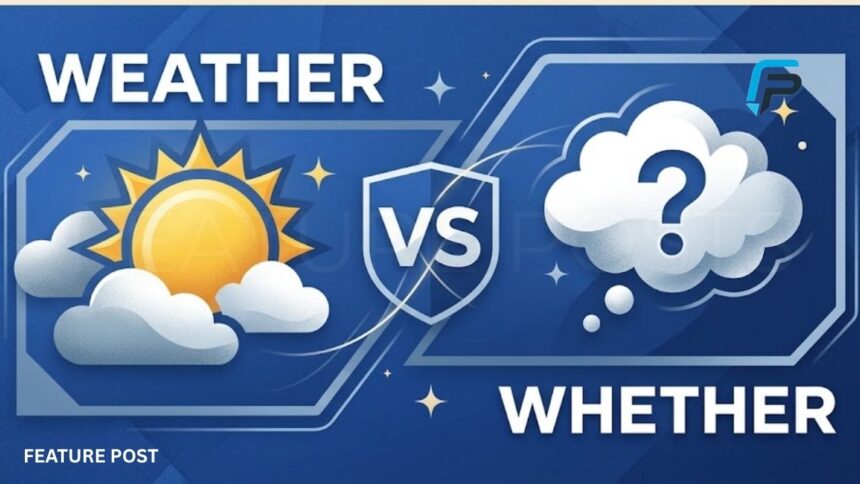
English has many words that sound almost identical but have completely different meanings. Wether and weather are two good examples. When someone types “wether” into a search engine, they may actually be looking for information about the weather. However, wether is not simply a misspelling. It is a real English word with a specific meaning related to sheep. A wether is a male sheep that has been castrated, while weather refers to the conditions of the atmosphere, such as rain, heat, wind, clouds, or sunshine.
The confusion becomes even greater because whether sounds very similar to both words. Whether is a conjunction used when talking about choices, possibilities, or uncertainty. For example, you might say, “I don’t know whether I should go.” Weather, meanwhile, appears in sentences such as, “The weather is cold today.” Wether belongs mainly to agricultural and animal-related language. Understanding these differences can help you avoid spelling mistakes and choose the right word in everyday writing, schoolwork, professional communication, and online searches.
What Does Wether Mean?
Wether is a noun that refers to a male sheep that has been castrated. Cambridge Dictionary gives this as its main definition, while Merriam-Webster similarly defines wether as a male sheep castrated before sexual maturity. Merriam-Webster also notes that the word can refer to a castrated male goat.
The word is therefore connected to farming, livestock, and animal husbandry rather than atmospheric conditions. You may see it in agricultural articles, farming records, livestock discussions, or descriptions of sheep. For most everyday conversations, however, people rarely use wether unless they are discussing animals. That limited use is one reason the word can seem unfamiliar to many English speakers.
What Does Weather Mean?
Weather describes the condition of the atmosphere at a particular time and place. It includes things such as temperature, wind, rain, snow, humidity, cloud cover, and storms. Merriam-Webster defines weather as the state of the atmosphere in relation to factors such as heat, cold, wetness, dryness, calm, storms, and cloudiness.
Weather is one of the most common words in everyday English. People talk about the weather when planning trips, discussing outdoor activities, checking forecasts, or simply making conversation. Examples include “The weather is sunny today,” “We are expecting bad weather,” and “Check the weather before leaving home.” In these situations, weather is always the correct spelling.
Wether vs Weather: The Main Difference
The easiest way to remember the difference is to connect wether with sheep and weather with the sky. Wether is an animal-related noun, while weather describes atmospheric conditions. Although the two words look and sound similar, they have no interchangeable meaning.
For example, “The weather is getting colder” refers to atmospheric conditions. On the other hand, “The farmer separated the wethers from the ewes” refers to sheep. The context makes the distinction clear. If you are talking about rain, sunshine, temperature, clouds, or storms, you need weather, not wether.
Why Do People Search for “Wether”?
Many people search for “wether” when they actually mean “weather.” This happens because the words are pronounced similarly and differ by only one letter. Search engines can often understand the intended meaning and may show results related to weather forecasts or the spelling difference.
The problem is especially common when people type quickly on phones or computers. Someone searching for “wether today” probably wants a weather forecast rather than information about sheep. However, the spelling wether remains a legitimate word, so it is important not to describe it simply as an incorrect version of weather.
Wether vs Weather vs Whether
There is a third word that causes even more confusion: whether. Unlike wether and weather, whether is generally used as a conjunction. It introduces uncertainty, a question, or a choice between possibilities. Cambridge Dictionary explains that whether can mean “if” or can introduce alternatives.
Consider these three examples: “The weather is warm,” “The farmer owns several wethers,” and “I don’t know whether to go.” Each word has a different job. Weather describes atmospheric conditions, wether identifies a type of animal, and whether expresses a choice or uncertainty. Learning this simple pattern makes the three words much easier to remember.
How to Use Weather Correctly
Use weather whenever you are discussing conditions in the atmosphere. This includes everyday situations such as rain, heat, cold, wind, storms, sunshine, and cloud cover. It can also appear in more formal phrases such as weather forecast, weather conditions, weather report, and severe weather warning.
Weather can also function as a verb. Merriam-Webster lists meanings such as exposing something to the elements and successfully enduring or surviving something difficult. For example, a wooden surface can weather over time, while a person can “weather a storm” in a figurative sense.
How to Use Wether Correctly
Use wether when referring to a castrated male sheep. The word is most likely to appear in agricultural, veterinary, farming, or livestock contexts. A farmer might discuss wethers alongside ewes, lambs, and rams when describing a flock.
Because wether is a specialized term, it does not normally appear in everyday conversations about climate. If you write “The wether will be rainy tomorrow,” the sentence is incorrect because you are describing atmospheric conditions. The correct sentence is “The weather will be rainy tomorrow.”
How to Use Whether Correctly
Use whether when discussing uncertainty, alternatives, or a choice. It commonly appears in structures such as “whether or not” and “whether…or.” Cambridge Dictionary gives examples involving uncertainty and decisions, including constructions such as “whether to” and “whether or not.”
For example, you can write, “I don’t know whether she will come,” or “We need to decide whether to stay.” You can also say, “Whether you agree or not, the decision has been made.” Remembering that whether is connected to choices and uncertainty makes it easier to separate it from weather and wether.
Common Wether and Weather Mistakes
One common mistake is writing “wether forecast” instead of “weather forecast.” Since a forecast concerns atmospheric conditions, weather is the correct word. Another mistake occurs when people write “bad wether” when they mean bad weather. In both cases, the extra a in weather is important.
A different mistake involves whether. Someone might write “I don’t know weather I should go.” That sentence is incorrect because the writer is expressing uncertainty. The correct version is “I don’t know whether I should go.” Cambridge specifically identifies “weather” and “wether” as incorrect spellings when someone intends to write whether.
Easy Ways to Remember the Difference
A simple memory trick can make these words much easier. Think of weather as something you see outside. Rain, sunshine, wind, clouds, and temperature are all connected to weather. Think of wether as an animal word because it describes a type of sheep. Finally, think of whether as a choice between possibilities.
You can also remember the three words through simple examples: weather = sky, wether = sheep, and whether = choice. These three connections cover their basic meanings. Once you learn the pattern, it becomes much easier to recognize the correct spelling when writing a sentence.
Why Correct Spelling Matters
Using the correct word matters because spelling can completely change the meaning of a sentence. A reader who sees “wether” may think you are talking about sheep, even if you intended to discuss the forecast. Similarly, using weather instead of whether can make a sentence confusing or grammatically incorrect.
Correct spelling also helps online content perform better in search. People may type common misspellings such as “wether” when they want information about weather. However, writers should still use the standard spelling weather when discussing atmospheric conditions. The legitimate meaning of wether should be explained separately rather than treated as the same word.
Final Comparison: Wether, Weather, or Whether?
The difference becomes simple once you focus on meaning. Wether is a livestock term for a castrated male sheep. Weather refers to atmospheric conditions such as rain, temperature, wind, and clouds. Whether is used to express uncertainty, alternatives, or choices. The words may sound similar, but their meanings and grammatical roles are completely different.
If you are talking about today’s forecast, write weather. If you are describing a type of sheep, write wether. If you are discussing a choice, use whether. Remembering these three simple meanings can prevent one of the most common spelling confusions in English and make your writing clearer.
Conclusion
Wether and weather are not the same word. Wether is a legitimate English noun connected to livestock, specifically a castrated male sheep. Weather is the word used for atmospheric conditions, while whether is used when discussing choices, uncertainty, or alternatives. Their similar pronunciation makes them easy to confuse, but their meanings are very different.
The easiest way to remember them is simple: wether means sheep, weather means atmospheric conditions, and whether means choice or uncertainty. Once these three meanings become familiar, choosing the right spelling becomes much easier. Whether you are writing an article, checking a forecast, or discussing farming, using the correct word will make your meaning clear.
Frequently Asked Questions
Is wether a real word?
Yes, wether is a real English word meaning a castrated male sheep.
What does weather mean?
Weather refers to atmospheric conditions such as temperature, rain, wind, clouds, and storms.
What is the difference between wether and weather?
Wether refers to a castrated male sheep, while weather refers to atmospheric conditions.
Is wether a misspelling of weather?
No, wether is a legitimate word, although people sometimes type it accidentally when they mean weather.
What does whether mean?
Whether is used to express uncertainty, choices, or alternatives.
Is it weather or whether?
Use weather for atmospheric conditions and whether for choices or uncertainty.
Is “wether” related to sheep?
Yes, wether specifically refers to a castrated male sheep.
How can I remember the three words?
Remember them as wether = sheep, weather = sky, and whether = choice.
Get More Updates from FEATURE POSTS