

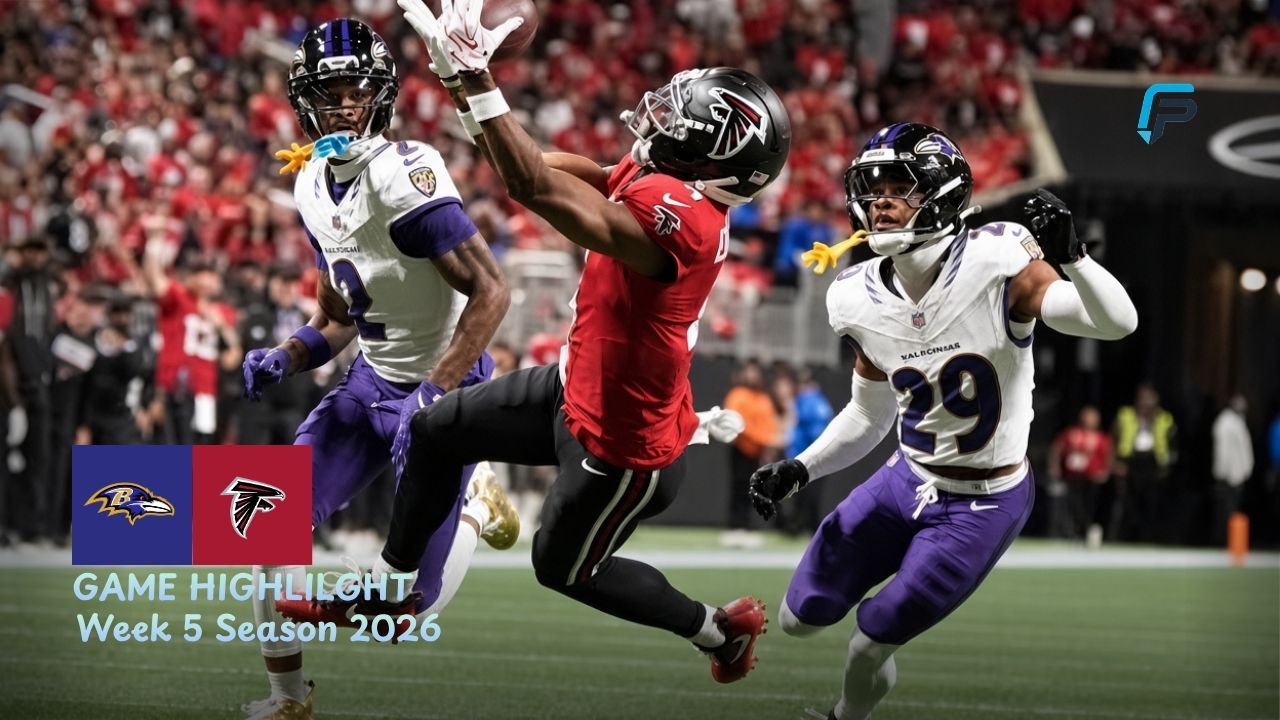
The Baltimore Ravens defeated the Atlanta Falcons 30–23 in an exciting Week 5 NFL matchup on October 11, 2026. The Sunday night contest at Mercedes-Benz Stadium in Atlanta featured a late comeback, a dramatic overtime touchdown, and a game-ending interception. Baltimore fought back from an eight-point deficit in the fourth quarter to secure its fourth win of the season.
For fans searching for Baltimore Ravens vs Atlanta Falcons Match Player Stats, the game offered several standout performances. Backup quarterback Tyler Huntley stepped in for the injured Lamar Jackson and delivered when Baltimore needed him most. Derrick Henry powered the rushing attack, while Kyle Hamilton made the decisive defensive play. Atlanta received strong contributions from Michael Penix Jr. and Drake London, but turnovers and Baltimore’s late surge changed the outcome.
Game Overview
Baltimore entered the matchup looking to maintain its position near the top of the AFC North. Atlanta aimed to protect its home field and strengthen its standing in the NFC South. The Ravens eventually prevailed 30–23 after overcoming an early deficit and forcing overtime, where their offense and defense delivered back-to-back game-changing plays.
The game took place at Mercedes-Benz Stadium on October 11. Baltimore improved to 4–1, while Atlanta fell to 2–3. The contest was especially important for the Ravens because Lamar Jackson was unavailable due to an ankle injury. Huntley’s performance showed how a backup quarterback can influence a game through accurate passing, smart decisions, and timely running.
Final Score and Quarter-by-Quarter Results
| Quarter | Baltimore Ravens | Atlanta Falcons |
|---|---|---|
| First | 3 | 7 |
| Second | 6 | 7 |
| Third | 6 | 3 |
| Fourth | 8 | 6 |
| Overtime | 7 | 0 |
| Final | 30 | 23 |
The Falcons controlled much of the first half and entered halftime with a 14–9 lead. Baltimore remained close through two long field goals from Tyler Loop, but Atlanta continued to add points after the break. The Ravens then produced a late touchdown and a successful two-point conversion to tie the game at 23–23.
The fourth-quarter comeback was the turning point. Atlanta led 23–15 after Nick Folk’s 48-yard field goal with 2:31 remaining. Huntley then directed a late scoring drive, connecting with Devontez Walker for a seven-yard touchdown. Derrick Henry converted the two-point attempt to force overtime, giving Baltimore another chance to take control.
Tyler Huntley’s Passing Stats and Game-Winning Performance
Tyler Huntley completed 24 of 32 passes for 201 yards and two touchdown passes. He did not throw an interception and added 20 rushing yards and a rushing touchdown. His ability to remain composed under pressure helped Baltimore recover from its late deficit and finish the game strongly.
Huntley’s first major scoring connection came on an 18-yard screen pass to Henry in the third quarter. His most important throw arrived with 40 seconds remaining in regulation, when he found Walker for a seven-yard touchdown. In overtime, Huntley completed the winning drive with a one-yard quarterback sneak. His performance demonstrated why reliable backup quarterback play matters during a long NFL season.
Explore San Francisco 49ers vs Seattle Seahawks Match Player Stats Week 5 Recap
Michael Penix Jr. and Atlanta’s Passing Stats
Michael Penix Jr. completed 19 of 32 passes for 240 yards and one touchdown before leaving the game with a rib injury. His passing production helped Atlanta maintain its lead through much of the contest. Penix spread the ball around and connected with several receivers, allowing the Falcons to move the chains and create scoring opportunities.
Penix’s touchdown pass went to tight end Kyle Pitts Sr., who caught a five-yard scoring reception in the second quarter. Atlanta also benefited from several long completions, including a 36-yard gain to Jahan Dotson. However, Penix could not finish the game because of his injury. Tua Tagovailoa entered late and threw the interception that ended Atlanta’s overtime possession.
Derrick Henry’s Rushing and Receiving Stats
Derrick Henry finished with 102 rushing yards on 24 carries and added an 18-yard touchdown reception. He also converted the crucial two-point attempt that tied the game at 23–23. His combination of power running and receiving ability helped Baltimore sustain its offense even when Atlanta appeared close to securing the win.
Henry’s receiving touchdown came on a screen pass from Huntley in the third quarter. The play reduced Atlanta’s lead and gave Baltimore renewed momentum. Henry’s rushing total also helped the Ravens control possessions and keep their offense balanced. His performance was important in a game where every scoring opportunity mattered and the final margin remained tight until overtime.
Justice Hill and Baltimore’s Supporting Playmakers
Justice Hill supplied another important contribution to Baltimore’s rushing attack. He gained 73 yards on just four carries, including a long run that helped the Ravens generate explosive plays on the ground. His efficiency provided a useful contrast to Henry’s heavier workload and gave the offense another way to attack Atlanta’s defense.
Zay Flowers caught eight passes for 53 yards, while Rashod Bateman added five receptions for 62 yards. Mark Andrews recorded four catches for 28 yards but also lost a fumble that Atlanta returned for a touchdown. Devontez Walker caught two passes for nine yards, including the late seven-yard touchdown that helped send the game into overtime.
Drake London and Atlanta’s Leading Receivers
Drake London led Atlanta’s receiving unit with seven catches for 118 yards. His ability to win contested catches and gain yards downfield helped Penix move the offense against Baltimore’s defense. London did not record a touchdown, but his yardage total made him one of the most productive offensive players in the game.
Jahan Dotson contributed two receptions for 54 yards, including a 36-yard gain that helped Atlanta reach scoring range. Kyle Pitts Sr. caught five passes for 42 yards and scored the Falcons’ only offensive touchdown. These contributions gave Atlanta several reliable targets, but the passing production was not enough to overcome Baltimore’s late comeback and defensive pressure in overtime.
Defensive Highlights: Kyle Hamilton’s Interception
Kyle Hamilton delivered the game’s defining defensive moment in overtime. After Baltimore scored to take a 30–23 lead, Atlanta needed a touchdown to keep the contest alive. Tua Tagovailoa completed his first two passes after entering the game, but Hamilton intercepted his next attempt to end the Falcons’ possession and secure the Ravens’ victory.
Atlanta also produced a major defensive play early in the first quarter. Jessie Bates III recovered Mark Andrews’ fumble and returned it 36 yards for a touchdown. Sydney Brown was credited with forcing the fumble, giving Atlanta an early advantage. That play showed how quickly defensive turnovers can change a game, although Baltimore ultimately produced the more decisive takeaway at the end.
Explore Las Vegas Raiders vs New England Patriots Match Player Stats and Highlights
Overtime Comeback and the Decisive Plays
Baltimore’s overtime possession began after Huntley led a late drive to tie the score. The Ravens moved downfield and capped the drive with a one-yard quarterback sneak, giving them a 30–23 lead after Tyler Loop’s extra point. Huntley’s touchdown completed a comeback that had looked unlikely when Atlanta led by eight points late in the fourth quarter.
Atlanta’s final possession offered a chance to respond, but Hamilton’s interception ended that opportunity. The sequence highlighted the importance of execution in high-pressure situations. Baltimore converted its last two major offensive opportunities into points, while its defense prevented Atlanta from answering. The combination of Huntley’s late-game leadership and Hamilton’s interception made overtime the defining chapter of the matchup.
Conclusion
The Baltimore Ravens defeated the Atlanta Falcons 30–23 in overtime on October 11, 2026. Huntley completed 24 of 32 passes for 201 yards and two passing touchdowns, while adding a rushing score. Henry contributed 102 rushing yards and a receiving touchdown, and London led Atlanta with 118 receiving yards. Hamilton’s overtime interception sealed the victory.
Atlanta showed it could compete through strong passing production and an early defensive touchdown, but Baltimore’s late rally changed the result. The Ravens tied the game in the final minute, scored on their opening overtime possession, and then stopped the Falcons with a decisive takeaway. For readers reviewing Baltimore Ravens vs Atlanta Falcons Match Player Stats, this game demonstrated how resilience, rushing efficiency, and timely defensive plays can determine an NFL contest.
Stay More Update FEATURE POSTS